


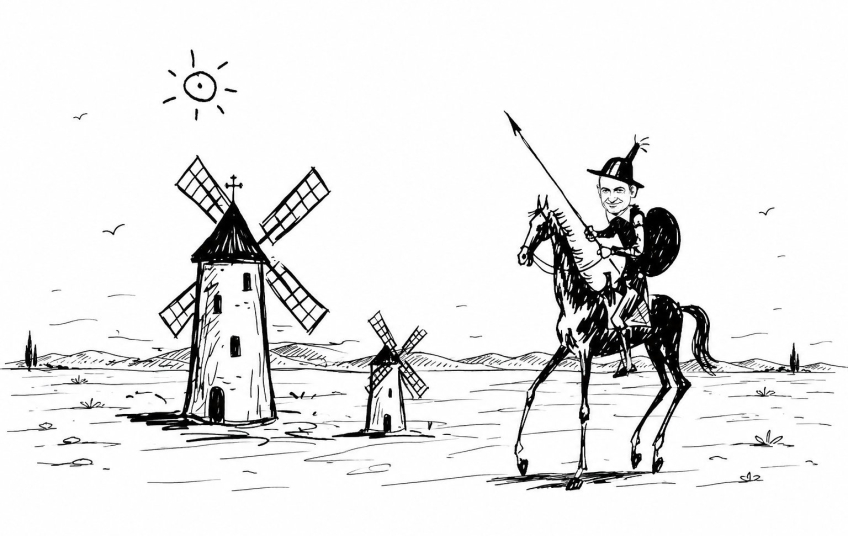

Strange as it may sound, among the 19 participants in the election campaign launched on May 8, the most unrestrained, if not outright deplorable, is the incumbent prime minister. He could have served as an example of restraint and magnanimity for the others, while simultaneously making those qualities an important and advantageous component of his own campaign. Instead, however, he chose a different path, the same one that brought him success in 2018 and one that is far more consistent with his nature and mindset. In that sphere, he is unrivaled and feels completely at ease, like a fish in water. It is the realm of punishment, pressure, and retribution, which he has decided to make the centerpiece of his election campaign.
Eight years ago, he came to power driven by the logic of revenge and retaliation. He relentlessly attacked the “plundering former authorities,” promising to recover the “stolen assets” piece by piece, distribute them to the people, and throw former leaders into prison. Speaking in the name of the people, playing on the delicate strings of public emotion, hypnotizing the masses, and bending them to his will through peasant cunning—these were the things Pashinyan did best during the “blessed” days of 2018, when it was so easy to manipulate the “proud citizens.” Now, finding himself in a difficult situation and struggling to restore his declining ratings, he has once again turned, out of desperation, to the tried-and-tested methods of the “good old days.”
But in eight years, times and morals have changed, and people no longer “put new wine into old wineskins,” as the well-known biblical parable teaches. Nothing and no one can restrain Pashinyan from his obsessive desire to reproduce his power in the June 7 elections. He himself recently admitted, “If I lose the upcoming elections, the people will tear me apart.” Naturally, he knows better than anyone how much harm he has caused over these eight years and what severe judgment he may face. Therefore, in order to secure re-election, he appears ready to resort to any means necessary, even bloodshed. Recently, law enforcement officers and psychiatrists allegedly drove a young man to suicide over damage to his campaign poster.
Human life appears to hold little value for him, as many believe has been demonstrated repeatedly: when producer Armen Grigoryan suddenly died during a court hearing, and earlier, when General Manvel Grigoryan was disgraced through accusations of stealing canned food. Most tragic of all, however, was the fate of the nearly 5,000 young men of reproductive age who lost their lives during the 44-day war—according to Pashinyan’s own admission—while more than 10,000 others were left wounded or permanently disabled. If given the opportunity, the authorities, critics claim, would not even spare the opposition trio they regard as especially “dangerous” on the electoral front. Every day of their campaign is being turned into a living hell through a constant barrage of insults and threats directed at the leaders of the “Prosperous Armenia” Party, the “Strong Armenia” Party, and the “Armenia” Alliance.
Pashinyan’s vocabulary has long crossed the boundaries of rhetoric befitting a statesman. It increasingly resembles the language of street retaliation, where a political opponent is viewed as a “target to be destroyed.” Judge for yourselves: “Where were the lackeys of the Kaluga oligarch and the others during the war? Have you imagined yourselves as ‘alpha males’? I’ll cut you down, man. What do you even talk about at home? Are you giving sex lessons? I’ll make you kneel…” Pashinyan shouted in Arabkir on May 18, warning opposition figures not to leave their homes because “they will come after them.” Otherwise, he declared, “these elections will turn into something else.”
The leader of the Civil Contract Party has also threatened the philanthropist and businessman Samvel Karapetyan, saying that “by the end of the year I’ll turn him into a homeless man.” He similarly targeted Gagik Tsarukyan: “I’ll bring you to your knees, Gagik Tsarukyan. Has your tongue grown too long? We’ll drag your son back from Belarus by the neck and lock him up—there’ll be no saving him.” Nor has he forgotten what he promised Robert Kocharyan, perhaps the most alarming statement of all, spoken in the name of the people: “On June 7, the people will bring you to your knees and take you to a penitentiary institution… or, if the people demand it, I will destroy you…” What kinds of statements are not uttered by this troubled man, consumed by fear, political insecurity, and the bitter sense of impending removal from office, having seemingly lost all self-control?
“Hayatsk Yerevanits” Journal