


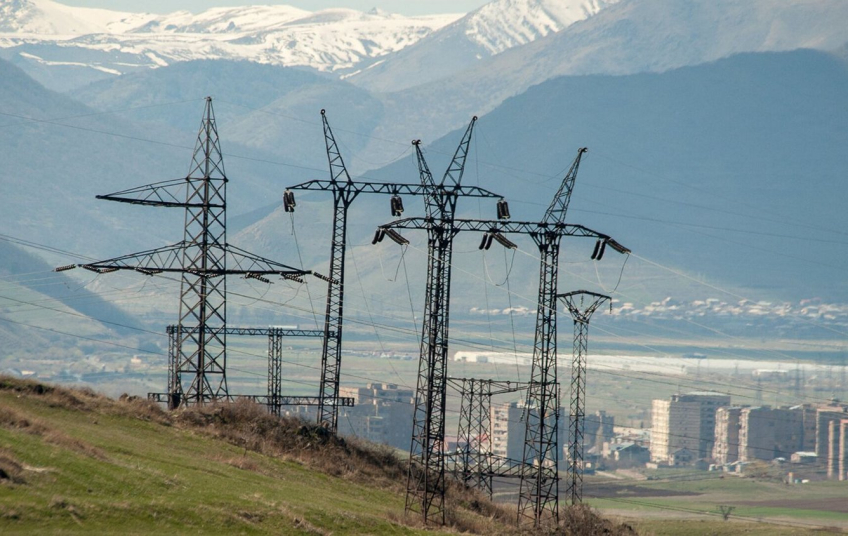

During the National Assembly–Government question-and-answer session on January 21, responding from the parliamentary rostrum to a question by MP Artur Khachatryan of the opposition Hayastan (Armenia) faction, Nikol Pashinyan announced the upcoming integration of the energy sectors of Armenia and Azerbaijan. “The energy systems of the two countries, moving along the path of peace, will undoubtedly and unequivocally be connected to each other and, on equal terms, will mutually benefit from both export and import transactions,” he assured.
This is a highly responsible yet questionable and dangerous statement, especially when it comes from Pashinyan. The danger lies not in the possibility that he is lying, as many consider typical of him; lying would be the lesser evil here. Rather, the falsehood concerns the alleged equal benefits for Yerevan and Baku from such a joint arrangement. It is obvious that these countries cannot cooperate on the principle of reciprocity. The party setting the terms will inevitably be Azerbaijan, as the winner of the war, an outcome no one seriously disputes. Consequently, the control switch for electricity—the “circuit breaker,” as it is called, will always remain in its control.
Anyone who doubts this need only look at the most recent example: the well-known “Trump’s Road” project, whose beneficiaries are the United States, Turkey, and Azerbaijan, but not Armenia. In fact, Armenia is the only losing party, having placed the most attractive part of its territory on the altar of geopolitical ebbs and flows and stepped aside. But let us return to the main issue: Pashinyan’s agenda of integrating the Armenian and Azerbaijani energy systems, which is presented within the framework of Armenian-Azerbaijani “peace” and is, in essence, part of the Trump Route for International Peace and Prosperity (TRIPP) project.
According to this project, the construction of power transmission lines and a gas pipeline was already discussed by Nikol Pashinyan and Azerbaijani president Ilham Aliyev back in October of last year in Copenhagen, although it remains unclear when the parties will begin taking concrete steps in that direction. One thing, however, is clear: the issue will be resolved when the Turkish-Azerbaijani tandem decides so. Unsurprisingly, the parliamentary opposition sees serious risks in this initiative, particularly the danger of handing over the “switch” of Armenia’s energy system to the Azerbaijani side.
People have not forgotten the 1980s, when Azerbaijan repeatedly blew up the gas pipeline supplying Armenia, causing severe energy shortages in Yerevan. Hayk Mamijanyan, head of the Pativ Unem (With Honor) faction in the National Assembly, compares linking one of Armenia’s most strategically important sectors with an enemy state to uniting the armed forces of the two countries: “Might they one day also merge the armies? Might they say, ‘To optimize costs, let’s unite the Armed Forces of Armenia and Azerbaijan’? This is the same logic as connecting energy systems of strategic importance.”
There are, of course, theoretical ways to manage such risks. One example is mutual deterrence—a control mechanism designed to maintain stability between adversarial powers by ensuring that any hostile action results in unacceptable consequences for both sides. In theory, this could prevent one party from unilaterally cutting off electricity, knowing that the other side could respond in kind. However, regardless of any such assumptions, Armenia must make every effort to diversify its energy system and overcome dependence on a single country, especially Azerbaijan, which would be far more likely to turn off Armenia’s lights than to supply them. Incidentally, there is a well-grounded view that the long-term objective of integrating the two energy systems is the eventual closure of the Armenian Nuclear Power Plant.
“Hayatsk Yerevanits” Journal