


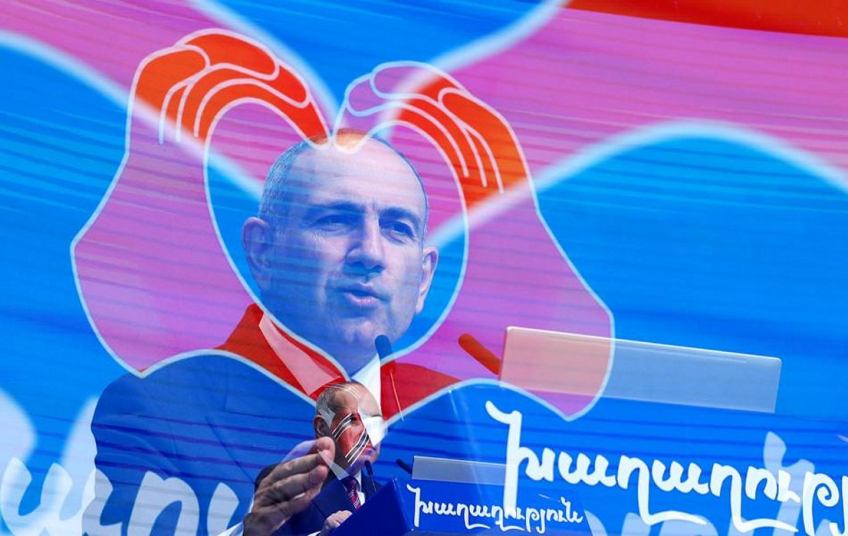

Those who closely follow Pashinyan’s actions, rhetoric, and the strange fluctuations in his behavior have undoubtedly noticed his psychological distress and frequent uncontrolled outbursts on various occasions. Being naturally fussy and unbalanced, he may suddenly become irritated by something he dislikes, for example, a journalist’s question, which can cause him to flare up, start shouting, and create a scene. However, such behavior should not be hastily dismissed as an innate flaw or attributed to seasonal aggravation. Rather, he appears to suffer from a hunger for ratings and a growing sense that the ground is slipping from beneath his feet. This, in turn, has made him unbearably tense, tension he constantly tries to relieve.
What are described as “intra-party visits” are, in fact, carefully disguised pre-election campaigns, which Pashinyan launched at least a month and a half before the parliamentary elections scheduled for June 7, in blatant violation of a key provision of the Electoral Code. Widespread violations of the law and the constitutional order by the country’s top authority have become commonplace and no longer surprise anyone, though that is a separate issue to be addressed on another occasion. For now, let us try to understand why he nevertheless began his campaign for the National Assembly elections so early.
As mentioned above, he possesses the real figures regarding his approval rating, figures that offer little hope for re-election. Yet for him, re-election is a matter of survival. Losing power, in his case, unlike that of former presidents, would mean losing everything: a privileged royal lifestyle, accumulated wealth, the luxurious benefits of authority, and even his personal life and stability. His negative rating has nearly reached the level of his positive rating in 2018, which drives him into panic and causes him to vent accumulated bitterness and hostility in all directions. Internally, he harbors resentment toward everyone, while outwardly he continues to “send hearts” across various platforms.
Pashinyan’s anxiety is evident in a number of incidents. For example, in one community in the Shirak region, he engaged in an argument with residents who opposed him, as they insisted that the village’s main roads had been asphalted under the previous authorities. He accused them of ingratitude for failing to support his political party, which he portrayed as responsible for improving the roads. Another notable episode occurred in the Yerevan metro, where he became involved in a verbal altercation with a woman from Artsakh. Fully aware of the vulnerability of people forcibly displaced from their thousand-year-old homeland as a result of ethnic cleansing, including his interlocutor, he referred to them as “those who fled from the Nagorno-Karabakh Republic.” Nevertheless, the woman responded with dignity. Also noteworthy was a provocation on March 29 at Saint Anna Church during a Palm Sunday service following the liturgy, which has been widely discussed. Let us set aside the “hero” of that incident—the uncultured bodyguard who assaulted an innocent schoolboy—and the equally uncultured official who silently approved his actions.
Dissatisfaction with Pashinyan and the Civil Contract–led government is growing day by day. Although his supporters appear satisfied with the results of a U.S.-funded opinion poll, the International Republican Institute (IRI) survey, the data suggest otherwise: only 18% of respondents named him as their first choice, clearly reflecting a lack of broad public trust. Armenian society is rejecting him in much the same way that, eight years ago, he and his supporters “took a step and rejected Serzh” (Serzh Sargsyan), who had attempted to retain power as prime minister and with whom the public had grown dissatisfied. Sargsyan publicly acknowledged his mistake and ultimately stepped down.
However, public dissatisfaction with Pashinyan is now two to three times greater than it was during Sargsyan’s tenure. The incumbent prime minister has not only made mistakes, arguably the lesser issue, but, over eight years in power, has also committed numerous acts that his critics consider deeply damaging to the state and its people. For these actions, he and his close circle should be held accountable under the full force of the law. Today, public discontent is so strong that even fear does not prevent people from confronting him directly, including refusing him entry into institutions and driving him out of communities, churches, and shops, regardless of how meticulously his regional visits are organized, scripted, and staged.
“Hayatsk Yerevanits” Journal