| |
October 15, 2001
Raffi K. Hovannisian Keynotes ACNIS Seminar on the Role of Police in a Democratic System
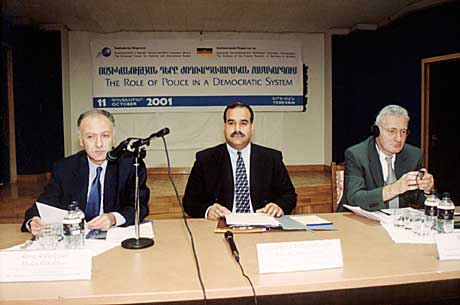
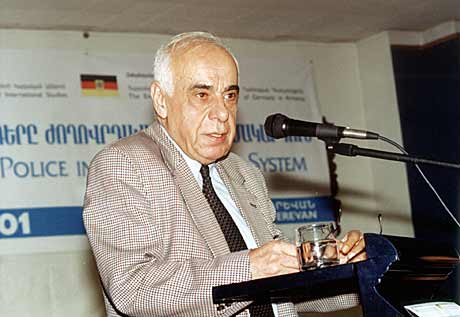
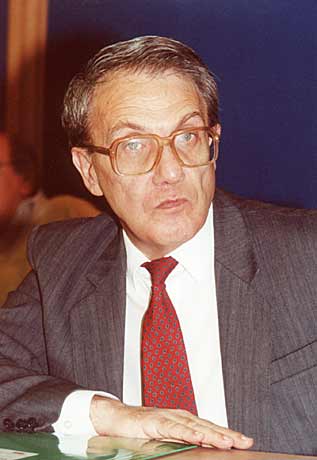
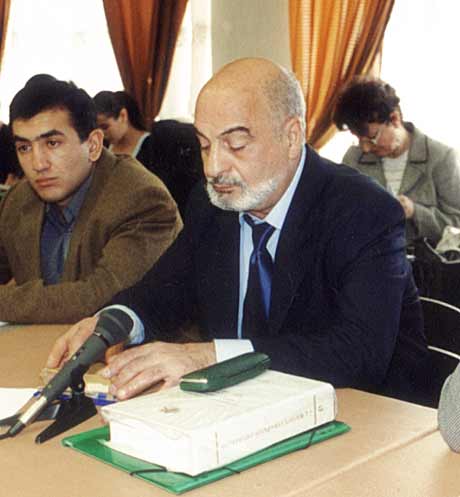
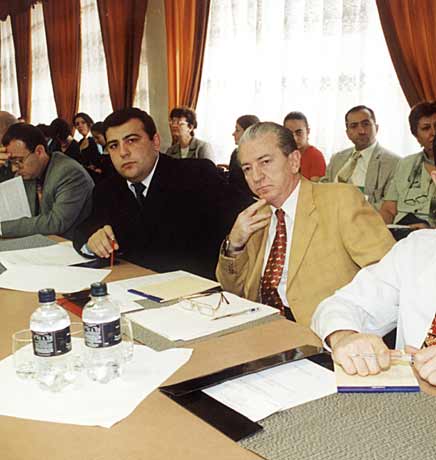
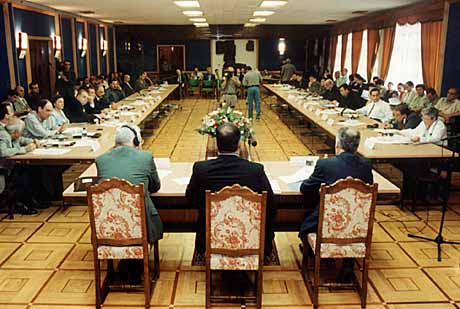
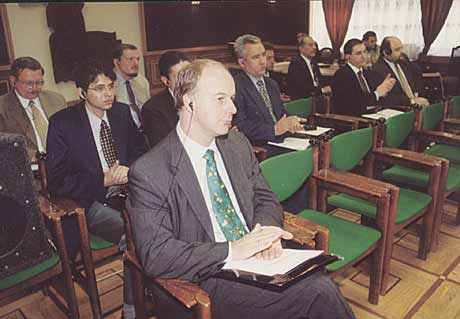
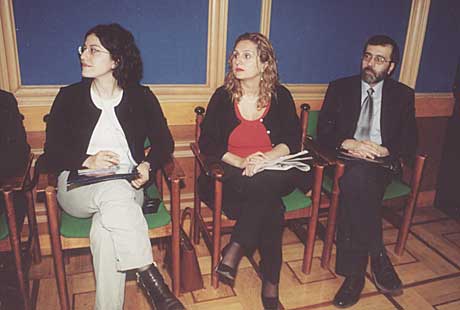
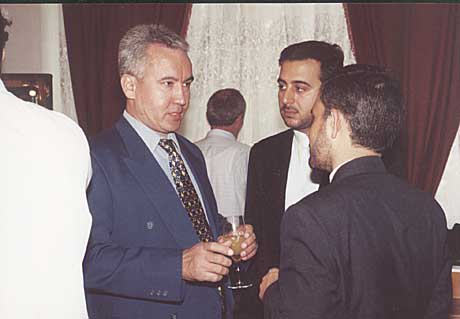
Yerevan, Armenia—The Armenian Center for National and International Studies (ACNIS), with the support of the German Embassy, convened at the Hotel Hrazdan a public conference on “The Role of Police in a Democratic System” on October 11. High-ranking officials from the legislative, executive, and judicial branches of government, specialists from educational and academic institutions, NGOs and human rights organizations, renowned intellectuals, as well as representatives of mass media, international organizations, and the diplomatic corps attended the seminar.
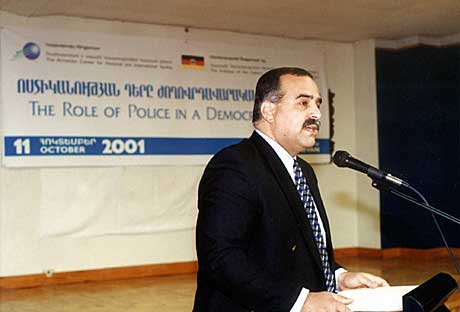
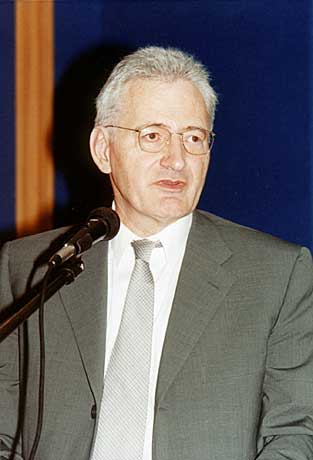
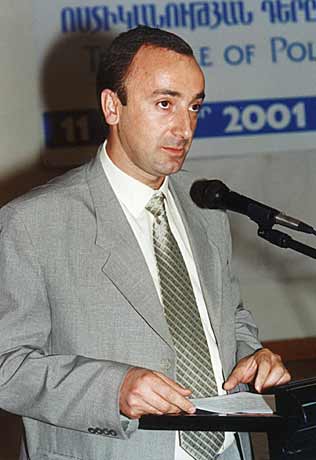
Raffi K. Hovannisian, ACNIS founder and Armenia's first Minister of Foreign Affairs, opened the meeting with keynote remarks, and Volker Seitz, Ambassador of the Federal Republic of Germany, expressed words of welcome. Dr. Aghasi Tadevosyan, ACNIS senior analyst and secretary of its Academic Council, prompted the aims and purposes of the seminar.
During the first working session on “The Function and Management of the Police in Armenia over the Last Decade,” Hrair Tovmasyan from the Gesellschaft fur Technische Zusammenarbeit (GTZ) addressed “Human Rights and Police in a Law-based State.” Doctor of Jurisprudence Vladimir Nazaryan covered the legal aspect of police activity in his paper entitled “The Legislative Regulation of the Police in a State of Law: Law and the Legislative Regulation of Police Operations in Armenia.” Constitutional Court Justice Valeri Poghosyan's address entitled “The Police and the Protection of Human Rights” concluded the morning session.
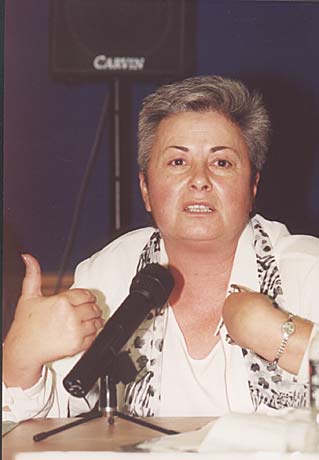
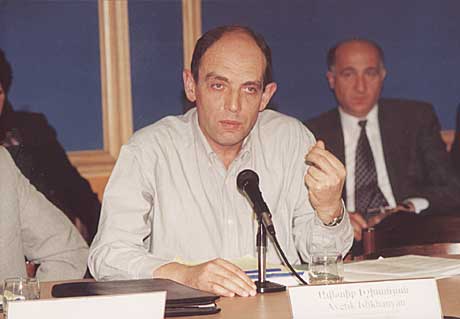
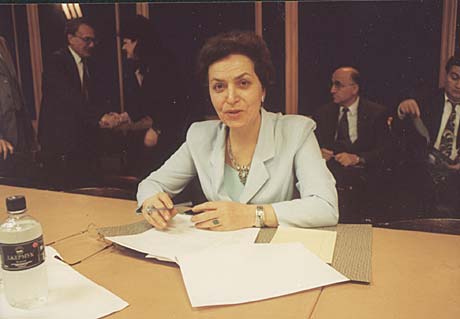
The deliberations were continued in the afternoon session on “The Police and Society in Armenia through the Last Decade: Assessments and the Prospects for Development.” Levon Nersisyan, director of the Sakharov Armenian Human Rights Center, offered a discourse on “Some Aspects of the Interaction between Police and Public.” Dr. Hranush Kharatyan, a prominent Armenian ethnographer, head of the Center for Ethnographical Research and a member of ACNIS's academic council, considered a poignant topic for Armenia, “The Emigration of Those Present or Why Do We Keep Silent?” Armenian Helsinki Committee chairman Avetik Ishkhanyan treated “The Role of Police in the Political System,” and Larisa Alaverdyan, executive director of the Fund against Violation of Law, talked on “The Role of the Police: Law and Reality.”
Raffi K. Hovannisian offered an ACNIS perspective on the establishment of democratic systems and the role of police therein. “The function of a police system generally depends on the political nature of the state. If government is formed by means of free expression and exercise of the political will of the body politic, the police act as the guarantor of safety and security of the members constituting that body. Democracy's system is founded on contractual relations between the members of society and an institutional structure created by it and operated according to law. When that law reigns supreme and applies to all, individuals' lives are protected from arbitrary violations and they are free to enjoy their rights. Liberty strives for law-abiding government which serves the law, and in such situations the police function in the face of violations as stipulated by law. The rule of law excludes arbitrariness committed by police and other public servants. The police and all constituents of national and state government carry out the law—not the wish of this or that government. The police themselves and all society are subject to the rule of law; authority and law are one and the same,” Hovannisian said.
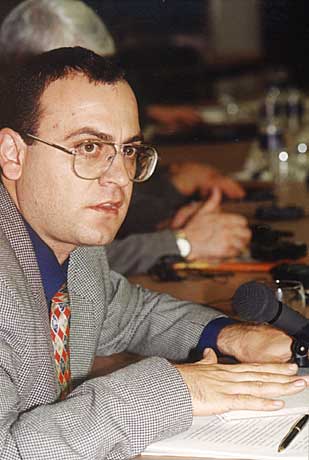
On the degrees of difference between this concept of “police in democracy” and Armenian realities, a stimulating discourse followed among government officials, particularly those in the police system, and the representatives of public and human rights organizations. Mikael Grigoryan, counselor to the Minister of Internal Affairs of Armenia, and Hovhannes Kocharyan, lecturer at the Academy of Internal Affairs, presented the details of the recently-adopted law “on police.” Professor Vladimir Nazaryan and attorney Hrair Tovmasyan objected that the law has a number of drawbacks which need amendment, while Grigoryan and Kocharyan claimed that the law was well written and would promote the elimination of shortcomings in the police system. In this respect, they suggested that legal and legislative law be discussed in narrower professional circles, and, that apart from the theoretical level amendments be offered to foster a more realistic application and exercise of the law in question.
Parallel with the deliberations on the Law on Police, the seminar covered several issues of systemic character. In Levon Nersisyan's opinion the fact that the law, which is intended to be an institution guaranteeing the security of society is used by some in power as an instrument to keep the public under pressure and in fear is cause for particular alarm. This gives rise to a corresponding public opinion and approach toward the police.
Tovmasyan remarked that to become a link promoting the establishment of a democratic system, it was necessary that the police change even the perception of their repressive function into a lawful, regulatory one.
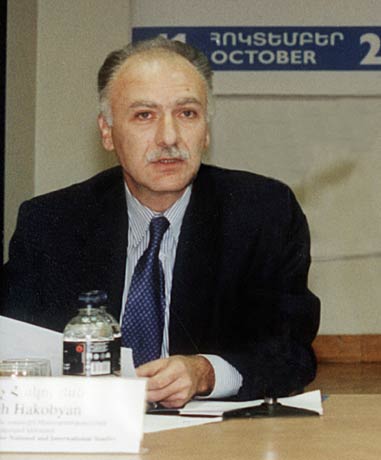
Vladimir Nazaryan's standpoint was interesting on the points of reference between the law and right, the contradiction between the Law on Police and common legislation and the functions of police within this context. In his report on the role of the police, Ishkhanyan mentioned that the Armenian police at times serve, not the law and the state, but rather a given government. Hranush Kharatyan noted that for purposes of establishing a democratic system and to avoid becoming an instrument for the ruling elite, it is necessary that the police create mechanisms for the promotion of reform of the system of internal affairs into a structure serving the state and the public system. ACNIS executive director Hrach Hakobyan and Aghasi Tadevosyan attached importance to ruling out the politicization of police in the support of particular governments, elites, and other interest groups, and suggested available mechanisms to this end. At the end of the one-day seminar it was decided to broaden public discussion and to follow up with a multidisciplinary exploration of this critical issue.
The Armenian Center for National and International Studies was launched in 1994 by Raffi K. Hovannisian, the first Minister of Foreign Affairs of the Republic of Armenia, and has since established a network of supporters in Armenia and around the world. Based in Yerevan, this public nonprofit foundation is devoted to research, publication, and education in the interrelated fields of foreign policy and international affairs, politics and government, economics and environment, security issues, and the social sciences. By tracking world developments, building foundations of knowledge and shaping the public dialogue, the Center serves as a catalyst for creative, strategic thinking and wider understanding of the global environment.
For further information on the Center or the seminar, call (37410) 52-87-80, fax (37410) 52-48-46, e-mail root@acnis.am, or visit the Center's website at http://www.acnis.am
The Armenian and Russian versions of the press release are attached.
* * *
|
|